


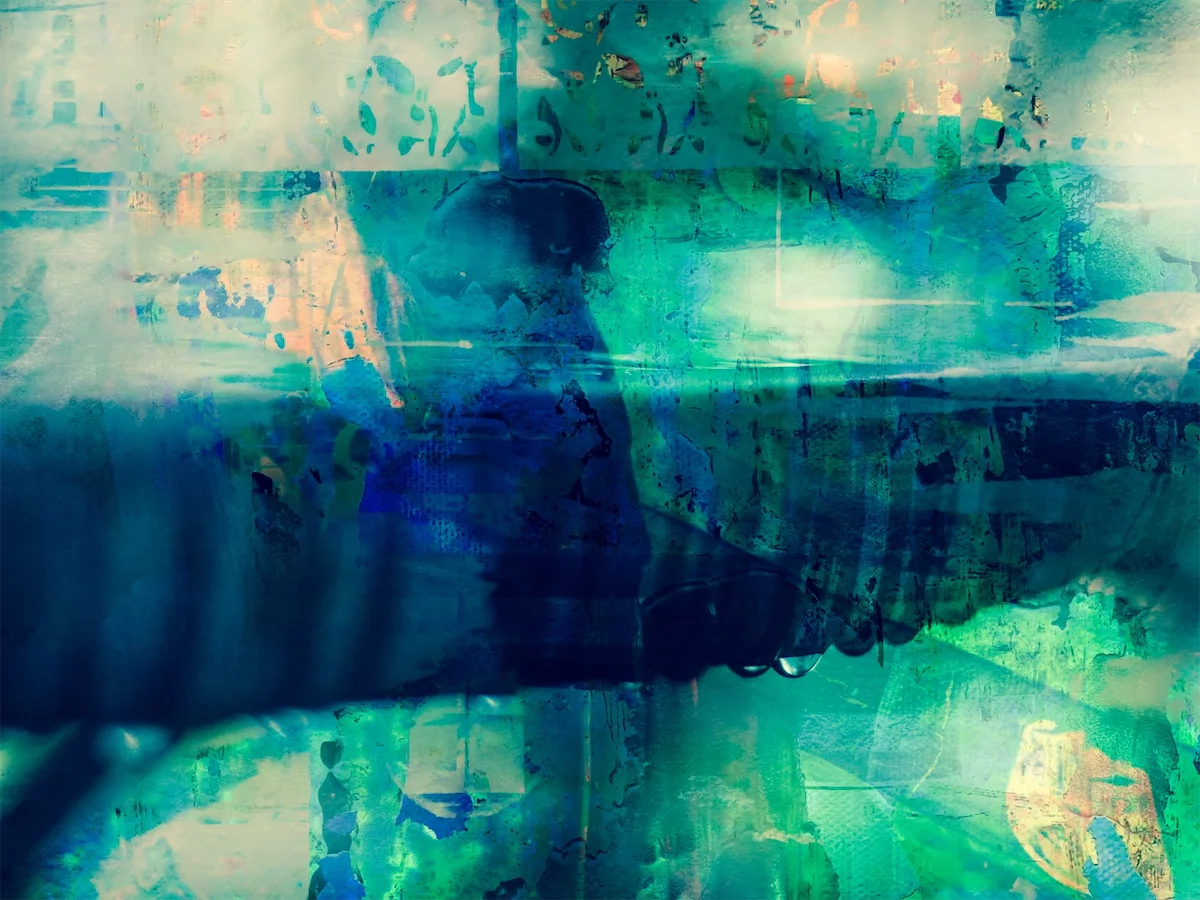
I remember when I realized that some of the fuzzy memories from my childhood actually happened. The realization made me so dizzy that I almost collapsed while walking through the city center, completely lost in thought.
Luckily, there was a pole I could hold on to…
I wanted to tell a friend about what was causing me so much trouble. But before I could even touch on what happened in my childhood, she started comparing her family with mine and found that I was so much better off.
Such situations can make you feel so damn lonely, even among people you may call friends. It's like shouting into a void, only no sound comes out.
Why couldn't she at least listen first to what I had to say?
Isn't that what friends are supposed to do?
Well, I’ll come to that below, as it took me quite a while to understand that dynamic.
I remember when I was a student, a 30-year-old man poured out his heart to me while I was eating at a fast-food restaurant. Not really sure how the conversation started, probably with some innocent remarks…
So I listened… and that man told me more and more about his life. And I kept listening because I was genuinely interested in what he had to say. I couldn't even explain why.
“You did that man a huge favor,” my friend said after he had finally left the restaurant.
I didn't understand my friend back then. But now I know how rare it is to have someone who listens to your story, who can carry it, and doesn't try to stop you or run away.
It is actually a little ironic that nowadays there is so much public discussion about childhood trauma, dysfunctional families, and narcissism, yet these conversations often become much harder when they enter our private lives.
So why is that?
Your Life May Look Fine from the Outside
We are quick to put people into boxes. If you have a good job, seem healthy, are kind to others, and show no obvious signs that something is wrong, people assume you must have a good life.
He smiles, so he must be fine. Easy as that…
But when that person starts telling you that their life is hell, that they had a terrible childhood, and that they do not know how to fill the emptiness they feel inside, things become more complicated. It does not make things any easier when they have difficulty expressing themselves and finding the right words.
Your eyes still see a person who looks fine. Your ears hear a different story…
Perhaps that person also told you very different stories about their family in the past. Stories that put the family in a good light.
In fact, dysfunctional families often try to look good from the outside. They do not want anyone to see what is really going on behind closed doors.
As a child, I quickly learned that I must never do anything that could make my parents look bad. Of course, small things still happened sometimes. But I was punished hard to make sure I would never forget the lesson.
So that’s how I learned to keep up the false image of my family…
People Prefer Simple Truths
Family is often regarded as a sacred institution. The general assumption is that our parents only want the best for us. And if they made some mistakes, they simply didn't know better and still gave their best.
After all, you somehow made it through all that and learned to stand on your own two feet.
So the conclusion often is: It can't have been that bad.
It is a simple explanation.
And according to that logic, the only thing you need to do is to let go of the past and move on in life.
Problem fixed. No need to complicate things. Just move on. Simple as that…
Accepting your story and all the pain that comes with it may actually lead them to question their own stories. But they might not be ready to go down that road.
I cannot blame them. I tried to push my childhood memories away for as long as possible. Numbing my emptiness with alcohol, working hard, and other distractions didn't work for me. But for others, it can seem to work for a surprisingly long time…
I am not saying that everyone carries pain from the past and tries to push it away. But many more people do than you might imagine, because that pain is often not visible from the outside. Simple explanations can protect us from truths we are not ready to face.
So far, I have covered what can make it so difficult to share your story and be heard. This leads to the question of how you can deal with all of that.