


His name was Pedro. I spotted this 12-year-old boy at the far end of the Plaza de Armas, the central market in Potosi, Bolivia.
As I came closer, I saw several beautiful gemstones he had laid out on a towel.
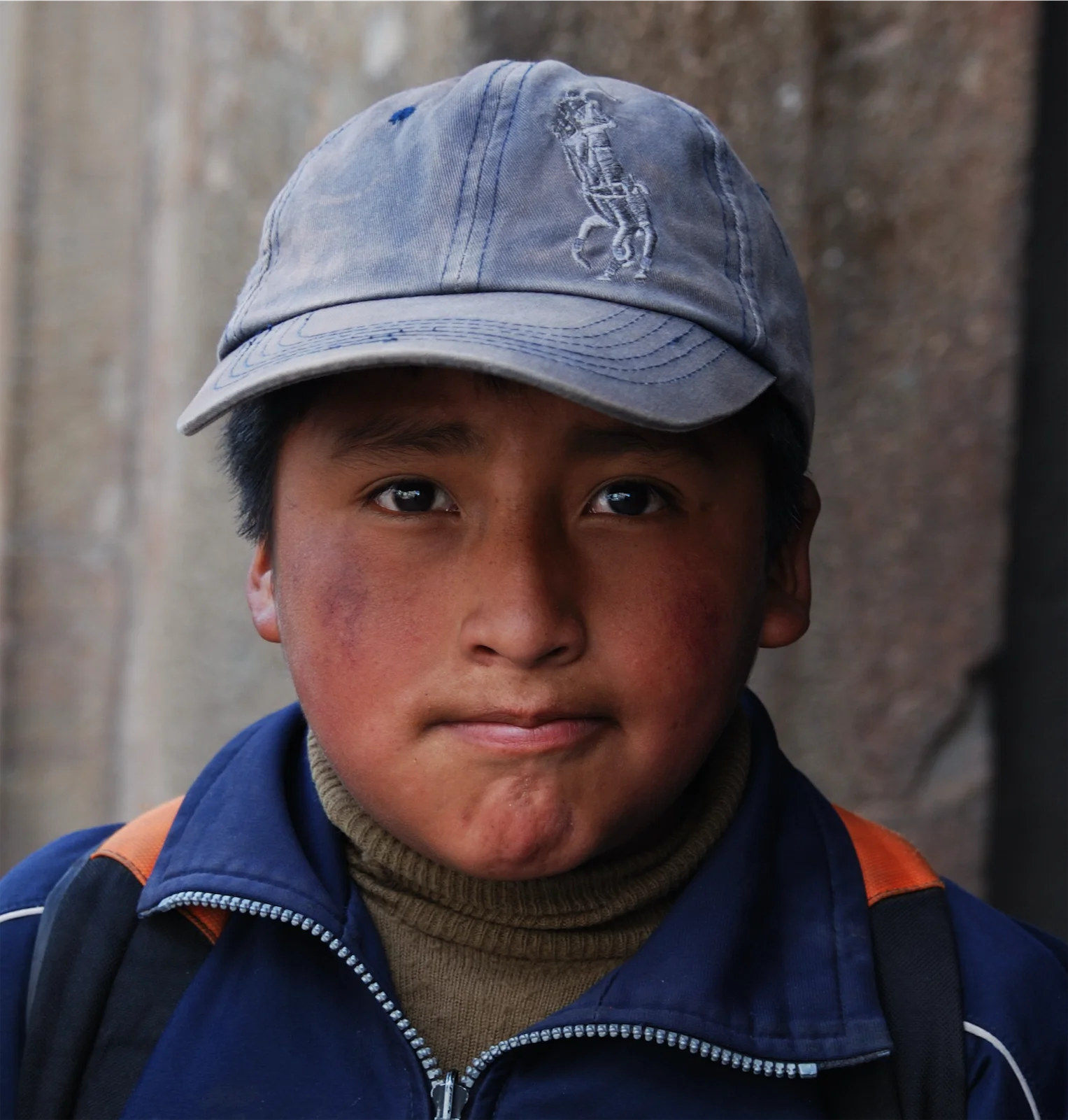
“Sir, do you want to buy something?” Pedro asked with a calm voice.
“Hmm, they’re wonderful. I’m a backpacker and don’t really have space for them. Do you have to make money?” I asked.
“No, I’m fine. I’m just trying my luck,” he said.
“But if you want to help me, you can teach me some words of your language,” he continued.
He took a small notebook out of his pocket and smiled at me in anticipation. I was more than happy to do him this favor.
From previous backpacking trips, I knew that moments like these were a golden opportunity to connect with people and learn about their lives and country.
After learning about his name and age, I wanted to know why Pedro didn’t try to sell me something. I knew how hard life could be in countries like Bolivia, and that children like him were often sent to work in the streets.
He explained to me that his father makes good money. That’s how his older brother was able to work abroad and send money home regularly.
I was surprised and asked Pedro what his father’s job was.
“He works in the mines,” he replied.
Tears shot into my eyes. I struggled to hold them back. I didn’t want Pedro to see how shocked I was—because I knew more about his father’s job than Pedro was probably aware of.
Three days earlier, I had visited the mines of Potosi. It was one of the most intense travel experiences I've ever had.
Imagine a mine 150 years ago. No safety fortifications inside. Poison everywhere you could touch. At 4,067 meters above sea level, the air is already thin before you even enter the tunnels.
This is what it looks like at the entrance of the mine:
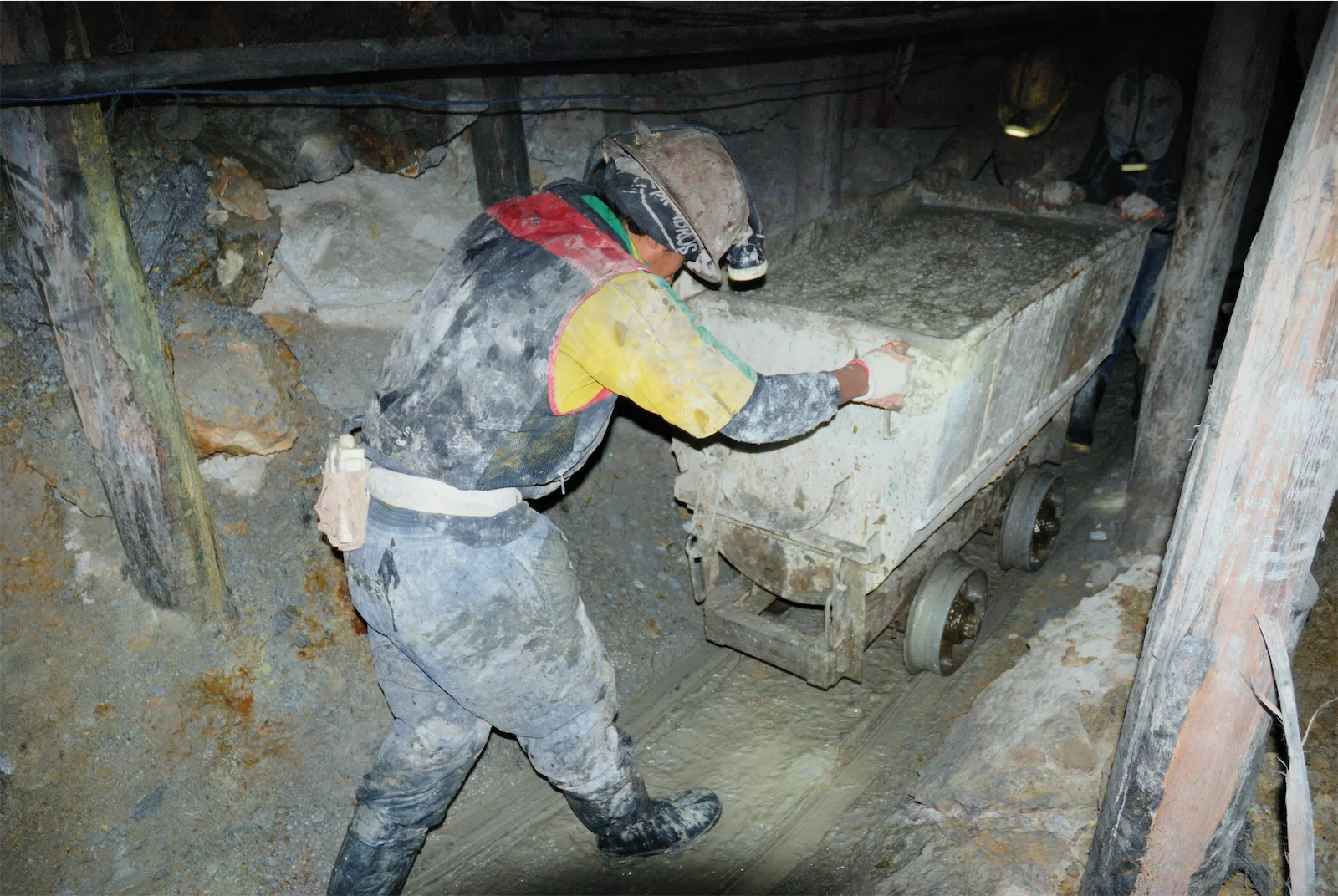
A few minutes after our group went inside, a girl had a panic attack. At that point, I was still mentally fine, thanks to the massive load of coca leaves I was chewing on.
Together with an American soldier, I decided to go to the deepest point of the mine. The deeper we went, the warmer it got—and it also felt like there was no air left to breathe.
I was about to suffocate. With my last breath, I managed to say, “I get no air.”
The soldier turned around and tore down my face mask. I could breathe again. I didn’t die that day, but it felt damn close.
Pedro’s father worked in the very same mine, often in 48-hour shifts or even longer. The miners there have no face masks or protective gloves. They are happy for tourists like me who bring such items along with dynamite as a present.
The life of a miner in Potosi is tough. They usually cannot do that job for more than 15 years. When they finally retire, they don’t have many years left to live. Their lungs are full of asbestos fibers, and they also come into contact with arsenic that is everywhere in the mines.
Pedro’s father sacrificed his own life for the good of his family. He wanted them to have a better life and escape the poverty they were born into.
My father was the complete opposite—and that’s why Pedro’s story struck me so hard.
When I was 14 years old, my father told me he didn’t care whether I made it in life or not. He had higher hopes for my brother anyway.
I didn’t want to believe this and pushed the pain away.
Five years later, my father made clear that he was dead serious. A few weeks before university started, he asked me how I planned to finance my studies.
I believed that he would support me. Not because I was a spoiled kid, but because it was the law in my country. When parents are wealthy enough, they have to pay. If they aren’t, the government supports you.
My parents were wealthy. I had two options: sue them or work while studying, because there were no student loans.
I was so angry at my father that I wished I had just punched him in the face. Really hard.
Back then, I was not ready to cut ties with my family. There was still some hope that they would love me one day. That day never came…
Pedro’s story showed me for the first time what it means to have a family—a father who sacrifices his life and a brother who feels responsible for him.
Pedro grew up knowing there are people who deeply care for him, that he is not left on his own, and that he can trust his family to give everything to support one another.
I had only seen this on television and never thought it could be real. But young Pedro was showing me that those things are real.
“Can I take a photo of you?” I asked him when I was about to leave.
“Sure, you can,” he said.
I hoped to capture the smile he had when we started talking. But I guess he must have seen how moved I was—and managed to keep a neutral face.
Before You Go…
This story was just one example of how life sometimes gives us the moments we need to see ourselves more clearly—and to discover the blind spots we didn’t know we had.
If this piece resonated with you, I’d love to hear which seemingly ordinary moments in your life brought you unexpected insight or even a breakthrough.
This was such a moving recollection of a poor but beloved boy; as well as of a boy with a cruel father ie the young Tim. Life can be so cruel. Although I'm not conventionally religious, it's difficult not to pray. I hope life is being kinder to you now.
I cried. Still am...I can't think of something similar right now, I mean, like a story. But I can recall many moments through my life when my parents treated me with cruelty, and when they emphasized how lucky and grateful I should be for every little or big thing they did for me, and also moments when they supposed they were showing tenderness, but they did it with such harshness and coldness, that it hurt more than beating. Maybe because it was a performance, not from their heart. And when I saw real tenderness in other kids from their parents, I felt pain.
I just remembered a little story. In summer 2023, during work, one of my colleagues talked to her daughter on the phone. It is important to say that this woman is one of my biggest wrongdoers, because, despite her attitude to me, when I heard how she was speaking to her kid, I melted. I was looking at her, very moved. When she ended the call, she asked me why I looked like that. I said that she sounded so sweet, and for a moment, I pretended that she was my mother and I was the girl on the other end, and that it was me who heard "I love you". At that moment, my voice broke, and this woman threw her arms around me and hugged me very tightly while I sobbed. After that, she was hostile again, but still...
yeah.
Needless to say... it was an amazing story you wrote, Tim, and thank you for the photos also. I hope little Pedro has a wonderful life.